

 Myopia management
 Dry Eye Treatment

School Screenings vs. Comprehensive Pediatric Eye Exams: What Pearland Parents Need to Know
Blog:School Screenings vs. Comprehensive Pediatric Eye Exams: What Pearland Parents Need to Know
School Screenings vs. Comprehensive Pediatric Eye Exams: What Pearland Parents Need to Know
As Pearland students return to the classroom, healthy vision can influence how comfortably they read, write, use digital devices, and follow lessons from the board. Many children receive a school vision screening, which can provide useful information about distance eyesight. However, a screening is not the same as a comprehensive pediatric eye exam.
Understanding the difference helps parents make informed decisions about their child’s vision. Even a student who passes a school screening may have a prescription, focusing, eye coordination, or eye health concern that requires evaluation by an optometrist.
What Does a School Vision Screening Check?
Most school screenings are designed to identify children who may have difficulty seeing letters or symbols at a distance. Students who do not meet the screening standard are typically referred for a professional eye examination.
This process can help flag an obvious vision concern, but its scope is limited. A screening usually does not provide a diagnosis, evaluate the complete health of the eyes, or measure every visual skill a child uses for learning. Testing conditions, available equipment, and the type of screening performed can also vary.
The American Optometric Association explains that school screenings cannot provide the same information as a comprehensive eye and vision examination. A child may have 20/20 distance vision while still experiencing problems with eye focusing, tracking, or coordination.
What Makes a Pediatric Eye Exam Comprehensive?
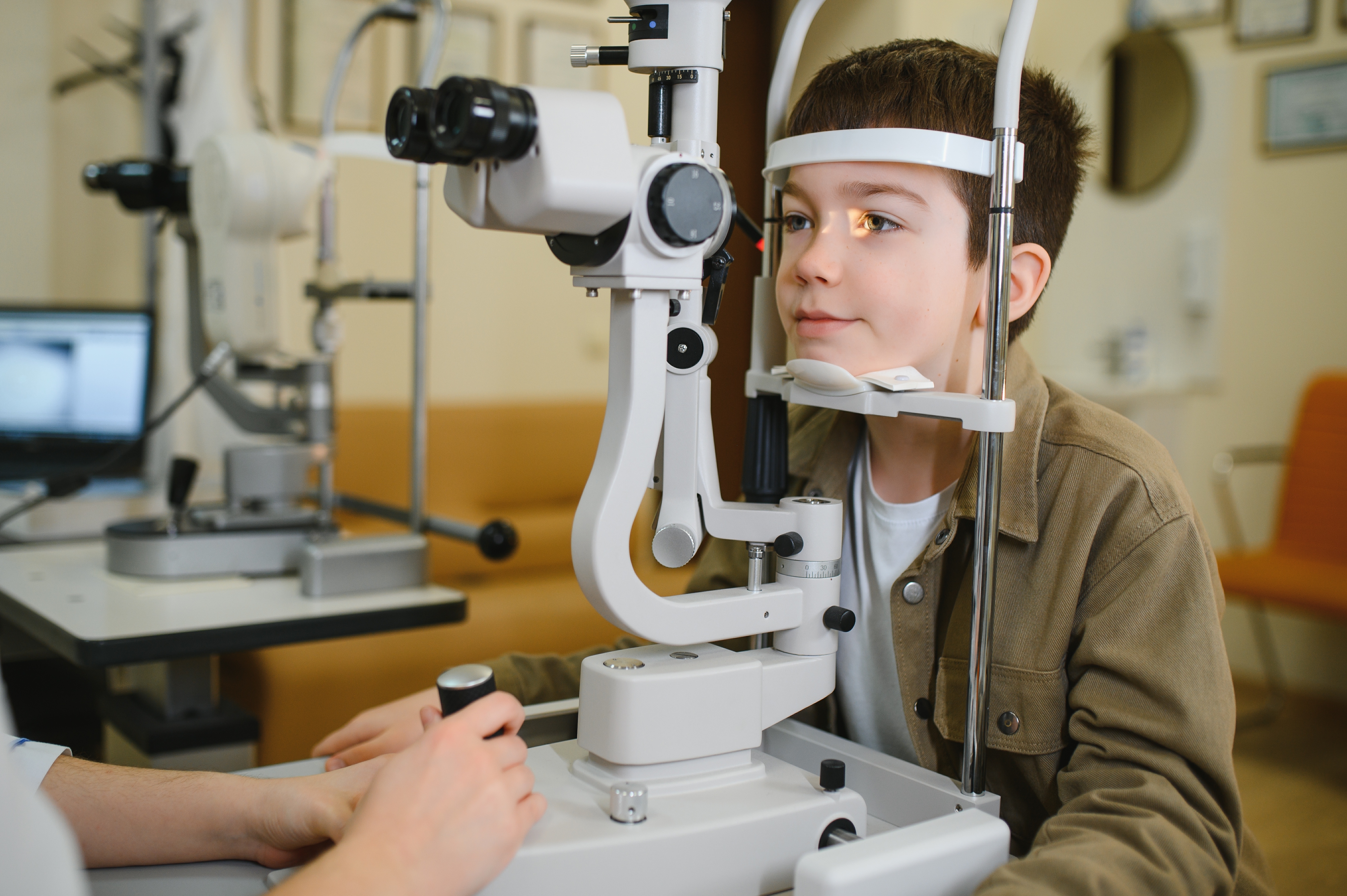
A comprehensive pediatric eye exam is performed by an eye doctor using specialized testing selected for the child’s age, symptoms, and development. It evaluates both visual function and eye health rather than relying on one measurement of distance clarity.
At Texas State Optical Pearland, our eye doctors provide comprehensive exams and care for childhood vision problems. The examination may assess the child’s prescription, eye alignment, focusing ability, depth perception, eye movements, and how effectively the eyes work together. The doctor also examines the internal and external structures of the eyes for signs of health concerns.
Signs a Screening May Not Tell the Whole Story
Children often assume that everyone sees the way they do, so they may not report a vision problem directly. Pearland parents should pay attention to behaviors that appear during reading, homework, sports, or screen use, including:
- Squinting or sitting close to the television
- Holding books or devices unusually near the face
- Losing their place or skipping lines while reading
- Covering or closing one eye during close work
- Complaining of headaches, tired eyes, or blurred vision
- Struggling to shift focus between a desk and the board
- Avoiding reading or becoming frustrated with homework
- Frequently rubbing the eyes or blinking excessively
These signs can have several possible causes. A comprehensive pediatric eye exam can determine whether nearsightedness, farsightedness, astigmatism, poor eye coordination, or another visual concern may be contributing.
Why Vision Matters in the Classroom
Classroom vision involves more than reading letters from across the room. Students must track words across a page, maintain clear near focus, coordinate their eyes, understand visual information, and quickly shift attention between different distances.
When these skills are inefficient, a child may need to work harder to complete an assignment. This extra effort can affect comfort, reading speed, concentration, and classroom confidence. Vision problems do not cause every learning difficulty, but identifying and correcting a visual barrier can help a child use their abilities more effectively.
Texas State Optical Pearland recommends regular comprehensive eye exams because children’s vision can change as they grow. Annual evaluations can help identify prescription changes and other concerns before they begin interfering with school, activities, or sports.
Start the School Year With a Clearer Picture
A school screening is a valuable first check, but passing one should not be viewed as confirmation that every part of a child’s visual system is functioning properly. Scheduling a pediatric eye exam before or early in the school year provides time to address concerns, update eyewear, and help your student approach classroom tasks with clearer, more comfortable vision.
Schedule your child’s comprehensive pediatric eye exam with Texas State Optical Pearland at 3240 East Broadway, Pearland, TX 77581. Call (281) 997-2627 to book an appointment.
Quick Links
Helpful Articles
article_category: products
article_category: psychiatry
article_category: faqs
article_category: cats
article_category: general
article_category: services
article_category: technology
article_category: dogs
article_category: restorative
article_category: vision therapy
article_category: contact lenses
article_category: health
article_category: conditions
article_category: eye surgery co-management
article_category: exotic
article_category: cosmetic
article_category: surgical procedures
article_category: aesthetics
article_category: preventative
article_category: ocular disease management
article_category: eyeglasses
article_category: eye health
article_category: large animal
[]
article_category: psychiatry
article_category: faqs
article_category: cats
article_category: general
article_category: services
article_category: technology
article_category: dogs
article_category: restorative
article_category: vision therapy
article_category: contact lenses
article_category: health
article_category: conditions
article_category: eye surgery co-management
article_category: exotic
article_category: cosmetic
article_category: surgical procedures
article_category: aesthetics
article_category: preventative
article_category: ocular disease management
article_category: eyeglasses
article_category: eye health
article_category: large animal
[]
Flowbite is an open-source library of interactive components built on top of Tailwind CSS including buttons, dropdowns, modals, navbars, and more.
Check out this guide to learn how to get started and start developing websites even faster with components on top of Tailwind CSS.
All Eyecare Services
We offer a wide variety of eye care services to the Pearland community. Contact us with any questions about our services.

Keep In Touch
For non-urgent questions or to learn more about our services, contact us today!

Contact Information
Office Hours
- Monday 8:30 AM - 6:00 PM
- Tuesday 8:30 AM - 6:00 PM
- Wednesday 8:30 AM - 6:00 PM
- Thursday 8:30 AM - 6:00 PM
- Friday 8:30 AM - 6:00 PM
- Saturday 8:30 AM - 2:00 PM
- Sunday Closed
- Monday 9:00am - 6:00pm
- Tuesday 9:00am - 6:00pm
- Wednesday 9:00am - 6:00pm
- Thursday 9:00am - 6:00pm
- Friday 9:00am - 6:00pm
- Saturday 10:00am - 2:00pm
- Sunday Closed
- Monday 8:00am - 5:00pm
- Tuesday
- Wednesday
- Thursday
- Friday
- Saturday
- Sunday
© 2026 Texas State Optical Pearland. All rights Reserved - Accessibility Statement - Privacy Policy - Sitemap
Managed and Designed by 